
The Gregorian calendar is a compromise. It is an agreement between the tidy human desire for regularity and the stubborn astronomical fact that the Earth's orbit around the sun takes neither a round number of days nor a simple fraction of one. A solar year is approximately 365.2422 days long — a figure that resists clean division, that demanded centuries of ecclesiastical argument to approximate, and that makes the seemingly simple question of "what day comes next?" into a problem requiring memory, attention, or ingenuity to answer correctly.
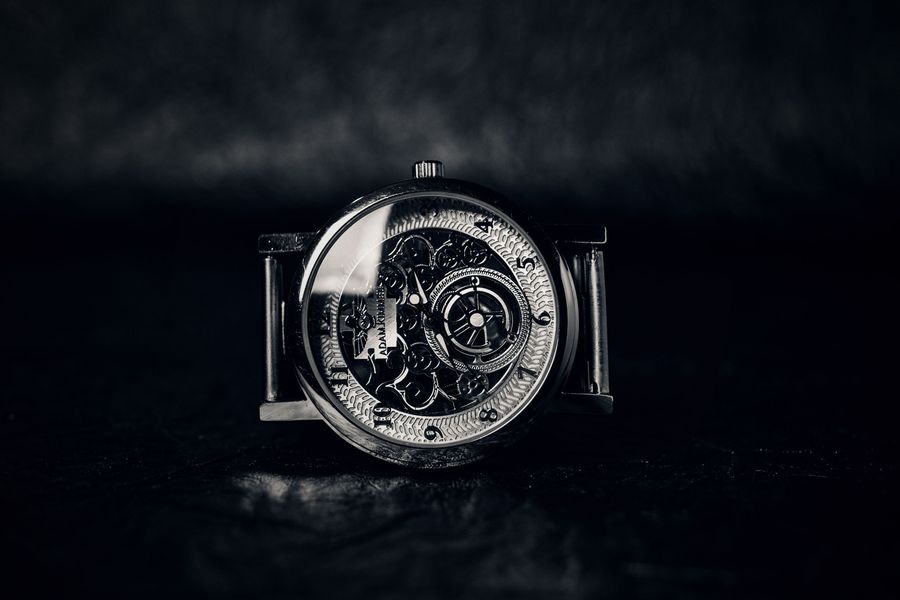
The perpetual calendar is the horological solution to this problem. A watch or clock fitted with a perpetual calendar does not merely display the date — it knows the date, in the full sense of the word. It accounts for the unequal lengths of the months. It knows that February has twenty-eight days, and twenty-nine in years divisible by four, excepting century years not divisible by four hundred. It adjusts itself without instruction.
This is no small feat for a device made entirely of metal, operated entirely by gears and springs, without sensors, chips, or the capacity to consult an external source. Everything the perpetual calendar knows was encoded into it at the moment of its design. It is, in a precise sense, frozen knowledge.
The Calendar Problem
To appreciate the complication fully, one must first appreciate the problem it solves. The irregularity of the calendar is not an oversight but an inheritance. The ancient Romans operated on a lunar calendar, which was periodically corrected by decree to re-synchronize with the seasons. Julius Caesar, recognizing the chaos this produced, commissioned the astronomer Sosigenes of Alexandria to design a more stable system. The result, introduced in 46 BCE, was the Julian calendar: 365 days per year, with a leap day inserted every four years.
This was a vast improvement, but still imprecise. The Julian year averages 365.25 days, while the actual solar year is 365.2422 days — a difference of eleven minutes and fourteen seconds per year. Trivial for a lifetime, but compounding over centuries. By the sixteenth century, the spring equinox — around which the date of Easter is calculated — had drifted ten days from where the First Council of Nicaea had anchored it in 325 CE. The Catholic Church could not tolerate this. In 1582, Pope Gregory XIII commissioned a reform, and the Gregorian calendar was born, complete with its exception to the century leap year rule.
Protestant and Orthodox nations resisted the Gregorian calendar for decades or centuries — Britain and its colonies did not adopt it until 1752 — but it eventually became the global standard. And it brought with it a new horological imperative: any watch or clock ambitious enough to display the date must somehow encode the Gregorian calendar's rules.
The First Perpetual Calendars
The earliest known perpetual calendar mechanisms date from the late seventeenth century. Thomas Campani, a Roman clockmaker, is credited with an early example circa 1682. But the complication was rare and imperfectly developed for another century. It was Abraham-Louis Breguet — the great Swiss-French watchmaker whose influence on horology is so pervasive that it can feel tiresome to invoke, yet is unavoidable — who brought the perpetual calendar to a high state of refinement in the late eighteenth and early nineteenth centuries.
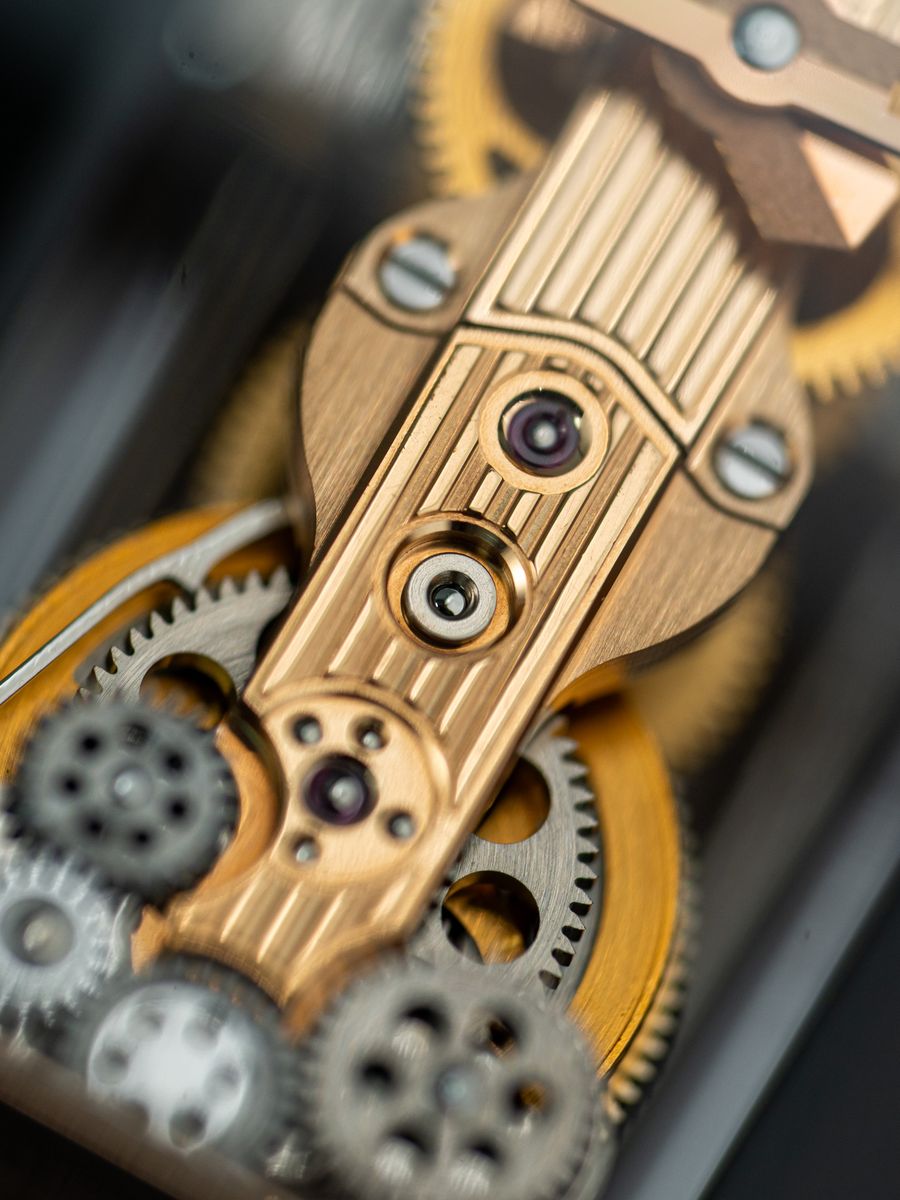
Breguet's perpetual calendar mechanisms worked, as most still do, through a system of cams and levers. A cam is a shaped wheel that, as it rotates, pushes or allows a lever to fall. The shape of the cam encodes the information: a cam cut with a profile representing the sequence of month lengths will, over the course of a year, mechanically advance the date display by the correct number of days. The leap year cycle requires a second, slower cam completing one rotation every four years.
"The perpetual calendar does not calculate. It remembers. Every rule of the Gregorian calendar is hidden in the geometry of its cams."— George Daniels, Watchmaking
The elegance of this system is that it requires no intelligence, no arithmetic, and no external correction. The rules of the calendar have been translated into geometry. The cam does not know that February is short — but it was cut to a shape that produces the same result as knowing.
The Mechanics of Memory
A modern perpetual calendar mechanism typically comprises three principal systems working in concert. The first is the date mechanism, which advances the date display one step per day. This is typically driven by the movement's timekeeping train, which runs continuously, through a connection that activates the date jump — usually at midnight.
The second is the month mechanism, which determines how many steps the date wheel must advance before resetting to the first of the following month. This is the heart of the perpetual calendar: a cam or program wheel with twelve positions, each encoding the length of the corresponding month. As the year progresses, this wheel advances through each position in sequence, instructing the date mechanism when to produce a short month and when a long one.
The third is the leap year mechanism: a four-year cam that overrides the normal February correction in leap years, allowing twenty-nine days instead of twenty-eight. This four-year cam is the most slowly moving element in the entire watch. In some movements, it completes one revolution over more than fourteen hundred days.
The interaction between these systems is what gives the perpetual calendar its character. Nothing is calculated in real time. The mechanism is, in the language of computer science, a finite-state machine: its future behavior is entirely determined by its current state and the fixed rules encoded in its geometry. The watchmaker who designs a perpetual calendar is not programming a computer but carving a prediction into metal.
The Great Exception
Almost every perpetual calendar in existence has one flaw: it does not know about century years. The Gregorian calendar's exception — that century years are not leap years unless divisible by 400 — means that the year 2100 will not be a leap year, despite being divisible by four. No perpetual calendar mechanism built to a standard four-year cycle can account for this. When February 28, 2100 arrives, the world's perpetual calendar watches will advance to February 29 — a date that does not exist.
This is not ignorance on the watchmaker's part. It is a conscious acceptance of a limitation. A mechanism that correctly handled century years would require a hundred-year cam and a four-hundred-year cam — components whose rotation would span multiple human lifetimes. Some horological theorists have proposed such mechanisms; none has been practically made. The standard compromise is that the century correction must be performed by hand, once per century, by whoever owns the watch at the time.
There is something almost poignant about this — a mechanical oracle that is precise in almost every particular, but that requires a human hand to correct it once every hundred years. It is a reminder that even the most sophisticated mechanical system is, ultimately, made within human constraints.
The Astronomical Lineage
The perpetual calendar's debt to astronomy is more direct than it might appear. The mechanism did not emerge from pure watchmaking theory; it emerged from the longstanding tradition of astronomical clocks — large, complex tower or table clocks that displayed not merely the time but the phases of the moon, the position of the sun in the zodiac, the date, and sometimes the motions of the known planets. These clocks, which flourished in the fourteenth through seventeenth centuries, were encyclopedic machines, encoding within their gearwork an entire model of the cosmos as then understood.
The perpetual calendar is the watchmaker's inheritance from this tradition — stripped of the orrery and the zodiac, compressed to fit a pocket, but preserving the essential ambition: a timekeeper that knows not just the hour, but the season; not just today, but the shape of the year.
When you set a perpetual calendar watch and release it, you are doing something that would have been recognizable to Campani, to Breguet, to the constructors of the great astronomical clocks at Strasbourg and Prague: entrusting a mechanism with knowledge of the heavens, and asking it to carry that knowledge forward in time, day by day, year by year, without forgetting.