
The great Swiss watch groups — LVMH, Richemont, Swatch Group — together employ tens of thousands of people and produce millions of watches annually. Their manufacturing infrastructure spans entire valleys of the Jura, their distribution networks reach every luxury market in the world, and their marketing budgets exceed the gross domestic product of small nations. They are, by any industrial measure, the dominant force in watchmaking.
And yet: at the very top of the market — in the rarefied atmosphere above fifty thousand Swiss francs, above a hundred thousand, above prices that have no ceiling — the most interesting watches are increasingly made by people working alone or in workshops of fewer than ten. These are the independents: watchmakers who chose to leave corporate employment, or who never joined it, to make watches entirely on their own terms.
The Lineage
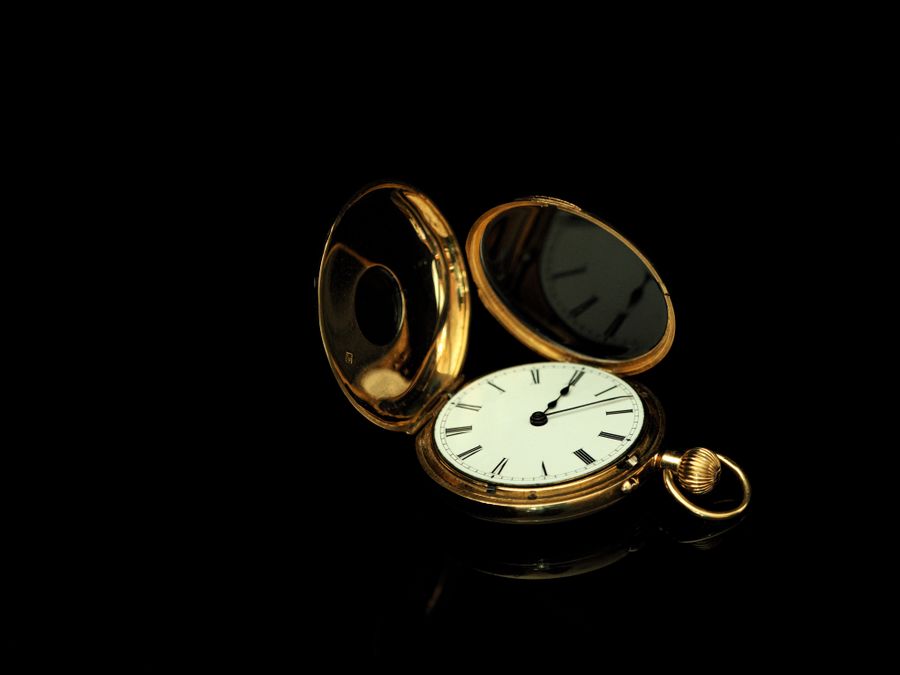
Independent watchmaking is not a new category. Abraham-Louis Breguet was, by modern standards, an independent — a master craftsman running a workshop, known personally to his clients, making each piece as a commission. The great pocket watch makers of the nineteenth century — Patek Philippe in its early years, Audemars Piguet before it became a manufacture — operated as sophisticated ateliers, not industrial concerns. The industrialisation of Swiss watchmaking in the late nineteenth and early twentieth centuries was the disruption; the independents are, in a sense, the continuation of the older tradition.
The modern independent movement traces its intellectual lineage primarily to George Daniels, the English watchmaker who worked alone in his Mayfair flat for decades, producing a total of approximately forty complete watches in his lifetime. Daniels made everything: his cases, his dials, his movements, the tools to make his movements. He invented the co-axial escapement. He wrote the definitive textbook on watchmaking. He proved, by example, that a single person working alone could make watches that surpassed the best industrial product in both technical achievement and artistic character. His most famous student, Roger Smith, continues this tradition on the Isle of Man today.
"The independent watchmaker is the last craftsman in the medieval sense — a single person responsible for every step of a complex object, from raw material to finished work. This is not nostalgia. It is a different kind of knowledge."— George Daniels, The Art of George Daniels
What Makes an Independent
The term "independent" is used loosely in the watch industry. Some manufactures describe themselves as independent merely to distinguish themselves from the large groups. What distinguishes true independents, in the meaningful sense, is not corporate structure but the degree to which a single person's vision, skill, and hand is present in the finished watch.
The most committed independents make their own movements — designing the layout, machining the plates and bridges, cutting the wheels and pinions, finishing every surface before assembly. This level of manufacture is extraordinarily demanding. A watch movement contains between one and several hundred components, each requiring machining to tolerances of a few microns, finishing to standards that demand specialist training, and assembly in a specific sequence under magnification. A watchmaker working alone might complete five to ten watches per year at this level of integration. Some complete fewer.
Below this level of absolute integration, there are independents who purchase movement blanks or ébauches from specialist suppliers and complete, finish, and modify them — adding their own complications, their own finishing standards, their own case and dial design. The Stern family's tradition at Patek Philippe began this way. This is still, by any reasonable standard, a high degree of craft involvement. The distinction matters because it clarifies what you are paying for: not an assembly operation with a distinguished name, but a specific person's specific skill applied to every part of the object.
The Economics of the Impossible
The economics of independent watchmaking are straightforwardly terrible, which is why so few people attempt it. A watchmaker who makes ten watches per year, spending three hundred hours on each, is consuming three thousand hours of skilled labour annually before accounting for materials, tools, workshop rent, or any of the ancillary activities that running a business requires. At even a modest hourly rate for specialist skilled work, the cost of a single watch approaches figures that only a narrow segment of the market can contemplate.
This creates a paradox. The independents who survive financially are those who can command prices that reflect their actual costs — and these prices are high enough to place their work beyond the reach of most watch enthusiasts who would most appreciate it. The collectors who can afford independent watches are often collectors who came to horology through the major manufactures and for whom the independents represent a culmination rather than an introduction.
Some independents accept the paradox and build their practice around it: small waitlists, existing collectors, a deliberate decision to remain tiny rather than scale. Others seek alternatives — collaborations with larger houses, limited edition projects that provide cash flow while preserving creative independence, teaching and writing alongside making. The Académie Horlogère des Créateurs Indépendants (AHCI), founded in 1985, provides a collective framework that gives independents a platform for exhibition and promotion without requiring them to pool their commercial operations.
What They Make
The creative freedom available to an independent is categorically different from that available to a manufacture. A manufacture must justify development costs across production runs that make economic sense. An independent justifies development costs across a client list, often in consultation with specific collectors who will receive the first examples of a new complication or movement architecture. The result is a density of invention that the industry's major players cannot match on a per-watch basis.
The independents of the current generation have produced some of the most technically original work in the history of portable horology: new escapement geometries, new approaches to constant-force mechanisms, new complications that exist nowhere in industrial production, new movement layouts that challenge assumptions built up over a century of standardised manufacture. This work happens not despite the small scale of independent ateliers but because of it. The freedom to make one unusual thing, perfectly, is the defining advantage of working alone.
The watches that result are not for everyone. They are often visually demanding, technically extreme, and priced at levels that require serious justification. They are, however, the clearest evidence available that watchmaking, as an art and as a craft, continues to develop — that the best work is not behind us, preserved in museums, but happening now, in small workshops, by people who chose the difficult path because no other path interested them.